Is your Paradise Valley home better suited to clean, glass-forward lines or warm, handcrafted curves? When you live in the Sonoran Desert, style is more than looks. It affects comfort, energy use, outdoor living, and resale. In this guide, you will compare Desert Contemporary and Santa Fe architecture through a local lens so you can plan smart upgrades or shop with confidence. Let’s dive in.
Style basics: what you’ll see
Desert Contemporary essentials
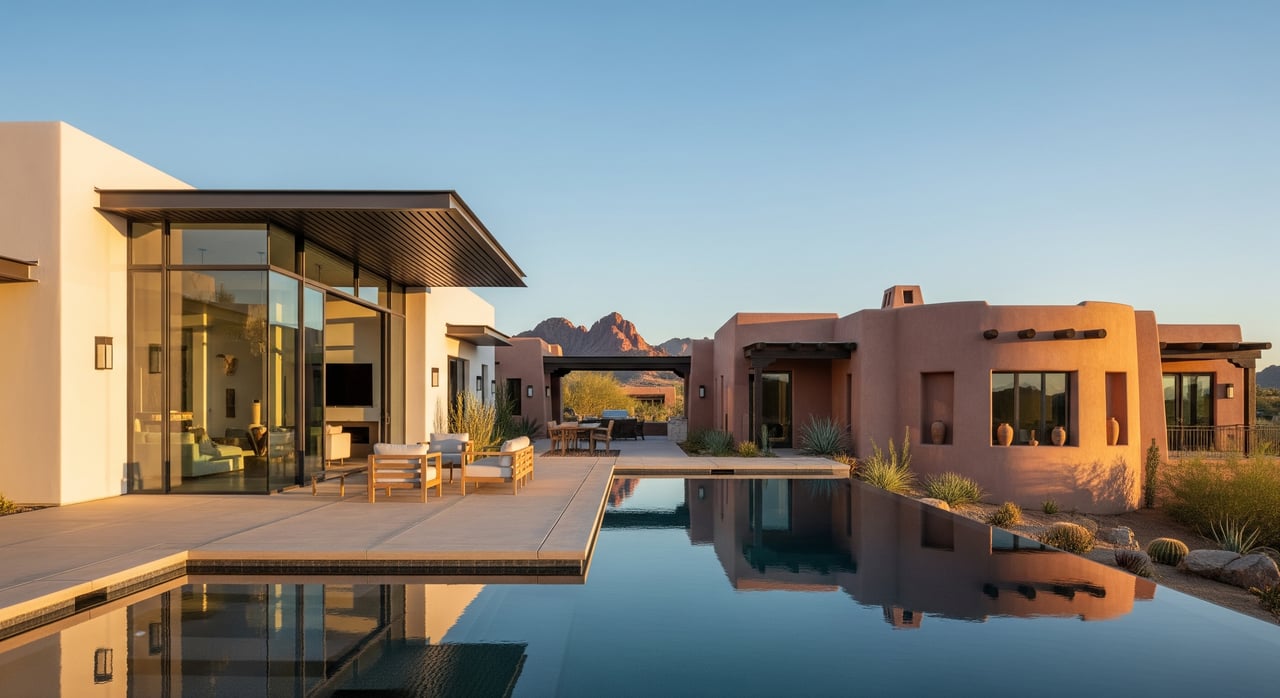
Desert Contemporary adapts modernism to the desert. You’ll notice low-slope or flat roof planes with deep overhangs that shade sun-exposed walls and patios. Long horizontal forms, slab-like planes, and clean, minimalist detailing create a calm, gallery-like feel.
Large window walls, sliding or folding doors, and clerestories frame views and blur the line between inside and out. Materials often include smooth stucco, board-formed or polished concrete, natural stone, exposed steel, and warm wood accents. The palette is restrained so the desert landscape and light take center stage.
Santa Fe essentials
Santa Fe, sometimes called Southwestern or Pueblo Revival, draws from Pueblo and Spanish Colonial traditions. Look for chunky, stepped volumes with rounded corners and flat roofs with parapets. Windows are typically smaller and deeply set, often accented by wood or metal lintels and decorative ironwork.
You may see vigas, which are exposed timber beams that project through exterior walls, along with plaster finishes in earthy pigments. Courtyards, portals, and walled patios create intimate outdoor rooms, and the overall mood is handcrafted and grounded in place.
Climate performance in Paradise Valley
Shading, orientation, and glazing
Both styles can perform beautifully in our hot, sunny climate when they are designed for the sun. Desert Contemporary homes rely on deep overhangs, cantilevers, pergolas, and adjustable shading to cut heat gain while preserving views. High-performance glass is essential. Look for low solar heat gain on west and south exposures, Low-E coatings, thermally broken frames, and shaded or fritted glass where needed.
Santa Fe’s smaller, recessed window openings naturally reduce solar gain. Walled courtyards and shaded portals create cool microclimates and support cross ventilation. The thick wall expression in Santa Fe forms, when paired with proper ventilation, can help moderate day-night temperature swings.
Materials and maintenance
Stucco is common to both styles and remains durable when detailed with proper flashing and control joints. For Santa Fe, iconic wood elements like vigas and exposed beams add character but require periodic sealing and insect protection. In Desert Contemporary designs, steel should be coated and fasteners specified to resist corrosion, and large expanses of glass need periodic inspection to maintain seal integrity and clarity.
Concrete floors and terraces are tough and elegant in either style, but darker finishes absorb more heat. Thoughtful finish selection can improve comfort underfoot.
Energy and water strategies
Flat or low-slope roofs in both styles make rooftop solar practical, especially when parapets conceal arrays. Pair PV with high-efficiency HVAC, zoned or VRF systems, and whole-house ventilation tailored to our climate. On the landscape side, xeriscaping, native plant palettes, permeable hardscapes, and drip irrigation reduce water use while making outdoor spaces more comfortable year-round.
Resale realities in Paradise Valley
What luxury buyers prioritize
Paradise Valley buyers value lot and views first. Mountain silhouettes and city lights are major draws, along with privacy and resort-style outdoor living. Turnkey finishes, updated mechanical systems, and a cohesive design story often outweigh strict style labels. Authenticity and quality matter. Poorly executed renovations that mix motifs without a plan tend to reduce appeal.
Desert Contemporary: strengths and risks
Desert Contemporary often resonates with buyers who want modern aesthetics, open living, and dramatic indoor-outdoor flow. Large glass walls showcase views and high-end finishes, which can be compelling for a younger luxury buyer pool. The main risks are twofold: if the look feels too stark for the setting, or if high glass ratios are not paired with desert-appropriate shading and glazing, some buyers may question comfort and energy use. Executed well, it performs and presents beautifully.
Santa Fe: strengths and risks
Santa Fe delivers a strong sense of place with artisan details and intimate courtyards that market well in our climate. The look is timeless when authentic. The risks show up in dated interiors, compartmentalized layouts, or heavy wood elements that require ongoing maintenance. Many sellers find that preserving the exterior character while opening interiors and updating kitchens and baths wins both style and function.
ROI and buyer pool
There is no universal winner for resale. The right choice depends on your lot, neighborhood context, and target buyer. If your property has panoramic views and nearby modern homes, a Desert Contemporary direction often maximizes appeal. If your lot is private and walled with an existing Southwestern presence, a refined Santa Fe update may protect and enhance value. Across the board, buyers pay for quality of execution, updated systems, outdoor amenities, and a design that feels at home in the Sonoran Desert.
Renovation roadmap in Paradise Valley
Pre-renovation homework
- Analyze your micro-market. Review recent neighborhood comps and buyer profiles to understand where your home should land.
- Study the site. Map sun angles, prevailing winds, sightlines, setbacks, and privacy. Decide where views and outdoor rooms can shine.
- Scope vs. budget. Get preliminary estimates from local architects and builders. Finish level, custom details, and structural changes drive cost.
Permits, zoning, and HOA checks
Before you commit to big changes, check Town of Paradise Valley zoning, building permits, lot coverage, height limits, and any design review steps. Confirm HOA or CC&R restrictions on exterior colors, materials, parapets, or rooflines. Special overlays are less common in PV, but verify early so you can plan timelines and avoid redesign.
Design moves that pay off
- For Desert Contemporary: Use deep overhangs, recessed glazing, and high-performance glass. Integrate natural stone, wood, and desert-tone finishes so the home sits comfortably in the landscape. Add covered outdoor rooms, shade structures, and water features that cool air.
- For Santa Fe: Preserve authentic massing, plaster, vigas, and portals while opening interiors for modern living. Balance window sizes for passive shading, and upgrade insulation and mechanicals. Keep the earthy palette consistent inside and out.
Maintenance and lifecycle planning
- Stucco and plaster: Inspect for cracks and ensure flashing at penetrations is sound. Reseal joints as exposure dictates.
- Wood elements: Plan for annual or biannual sealing and routine insect checks.
- Large glazing: Monitor seals and replace failed insulated units promptly to protect clarity and comfort.
- Pools and systems: Budget for service on pools, irrigation, and HVAC typical of luxury properties.
Timelines and budgets at a glance
- Cosmetic refreshes such as interior finishes, kitchens, baths, and landscape updates often finish in weeks to a few months.
- Major remodels with layout changes or exterior rework can take several months to a year, depending on scope and permitting.
- Full rebuilds scale with complexity. Engage an architect and builder who know PV to set realistic budgets and milestones.
Decision checklist: which path fits your property?
- What does the lot offer first: epic views, or private walled courtyards? Match the style to the strength.
- How do neighbors read: predominantly modern, or Southwestern and Territorial? Align without copying.
- What is the target buyer: modern open-plan seeker or authenticity-focused buyer?
- Where will dollars go furthest: glazing and shading packages, or artisan plaster and woodwork? Prioritize upgrades that improve comfort and presentation.
- Are your systems current: HVAC, pool equipment, and solar? Turnkey mechanicals help listings stand out.
Listing prep tips for sellers
- Service HVAC, pool, and any solar equipment, and keep records ready.
- Decide on a cohesive direction. Avoid mixing motifs without a unifying palette.
- Invest in high-impact rooms: kitchen, primary suite, and outdoor living areas.
- Refresh landscape with native, low-water plants and clean, permeable hardscapes.
- Stage to the style. For Desert Contemporary, highlight indoor-outdoor flow and view corridors. For Santa Fe, showcase courtyards, portals, and artisanal details.
A well-sited Paradise Valley home that respects the desert and delivers a clear design story will attract the right buyers, regardless of label. Whether you lean modern or embrace Southwestern character, the keys are climate-smart details, cohesive finishes, and move-in-ready systems. If you want help aligning your plans with local buyer demand and a pricing strategy that maximizes your outcome, connect with The Studebaker Group. We pair boutique, client-first guidance with high-end marketing to present your home at its best.
FAQs
Which style has better resale value in Paradise Valley?
- Neither style universally wins. Fit to the site, quality of execution, outdoor living, updated systems, and neighborhood alignment drive value more than the label.
Is Desert Contemporary too hot for the Sonoran Desert climate?
- No, if designed for the desert. Deep overhangs, high-performance glazing, proper insulation, and efficient HVAC deliver comfort and energy control.
Are Santa Fe homes harder to maintain than modern builds?
- Some traditional elements like exposed timber and thick plaster need periodic care, but thoughtful detailing and modern materials can lower long-term upkeep.
Which is more expensive to renovate: Desert Contemporary or Santa Fe?
- It depends on scope and finishes. Large glass and steel work can be costly, and handcrafted wood and plaster details can be too. Base budgets on finish level and structural changes.
Should I modernize a Santa Fe home’s interior before selling?
- Often yes. Opening key living areas and updating kitchens and baths typically boosts appeal while preserving the exterior’s regional character.